Micro‑Fabricated Magnetostrictive Resonators
Microscale resonators that ring at a precise frequency when a magnetic field excites them. Coat one, and whatever it captures changes the tone. One chip can carry many sensors, read wirelessly with no battery on board.
A sensor that is a tuning fork
The research is the resonator itself: the material, the microfabrication, and the read-out. What it senses depends on the coating we put on it.
 01
01Fabricate
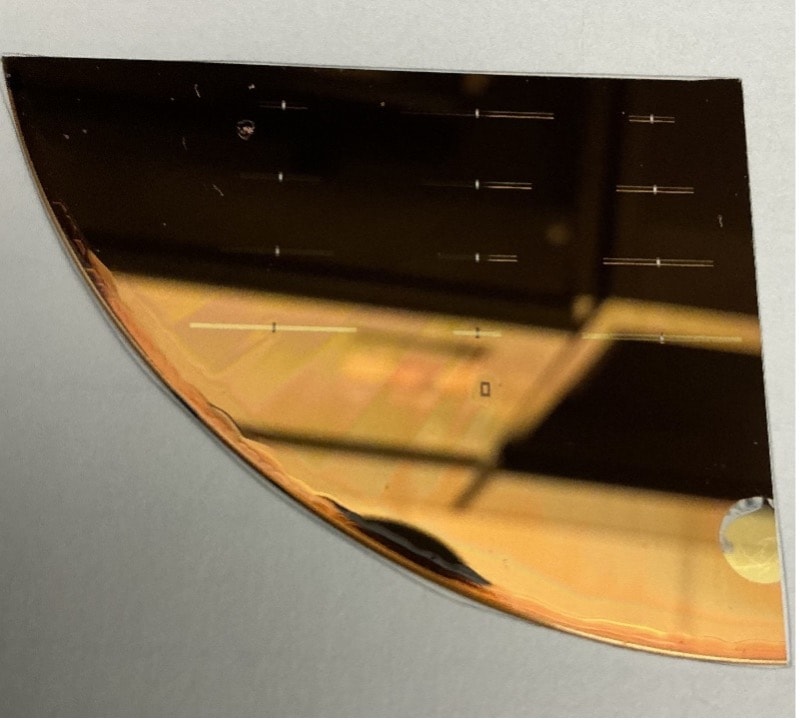
Our magnetostrictive alloy is electroplated into lithographic molds on silicon, then released to form free-standing resonators. Each one rings at a frequency set by its length, so a single chip can carry many distinct channels.
 02
02Functionalize
A selective coating is added to the resonator surface. When the coating captures its target, the added mass lowers the resonant frequency and changes the signal amplitude.
 03
03Read wirelessly
An applied magnetic field makes the resonators ring, and a nearby pickup reads each tone. There is no battery and no electronics on the sensor itself, and frequency and amplitude give two independent readings.
One resonator, many targets
Change the coating and the same resonator becomes a different sensor. Here is where each target stands today.
Hydrogen
Palladium-coated resonators detected hydrogen wirelessly with Sandia National Laboratories, then reset with a nitrogen purge.
See the results →Hydrogen sulfide
Selective adsorbents identified for oil and gas environments, with experimental validation pending.
Gases & chemicals
Coatings that bind a specific vapor or chemical species, for leak detection and process monitoring.
Biological agents
Surface chemistry that captures a biological target, so binding shows up as a frequency shift.
Humidity
Moisture-absorbing films that load and unload with ambient humidity.
Temperature
The resonant frequency responds to temperature, usable as a reading on its own or as a reference channel.
Sensing where batteries and radios can’t go
- No battery
- Nothing on the sensor to power, charge, or replace.
- Many channels
- Several resonators, several targets, and an ID on one chip.
- Through barriers
- Read with near-field magnetic coupling where RF struggles.
- No circuits
- No active electronics or memory, so radiation has little to upset.
From resonator to application
MagTag
Our passive, wireless tag built on these resonators, for identification and sensing in RF-challenged and extreme environments.
Read more →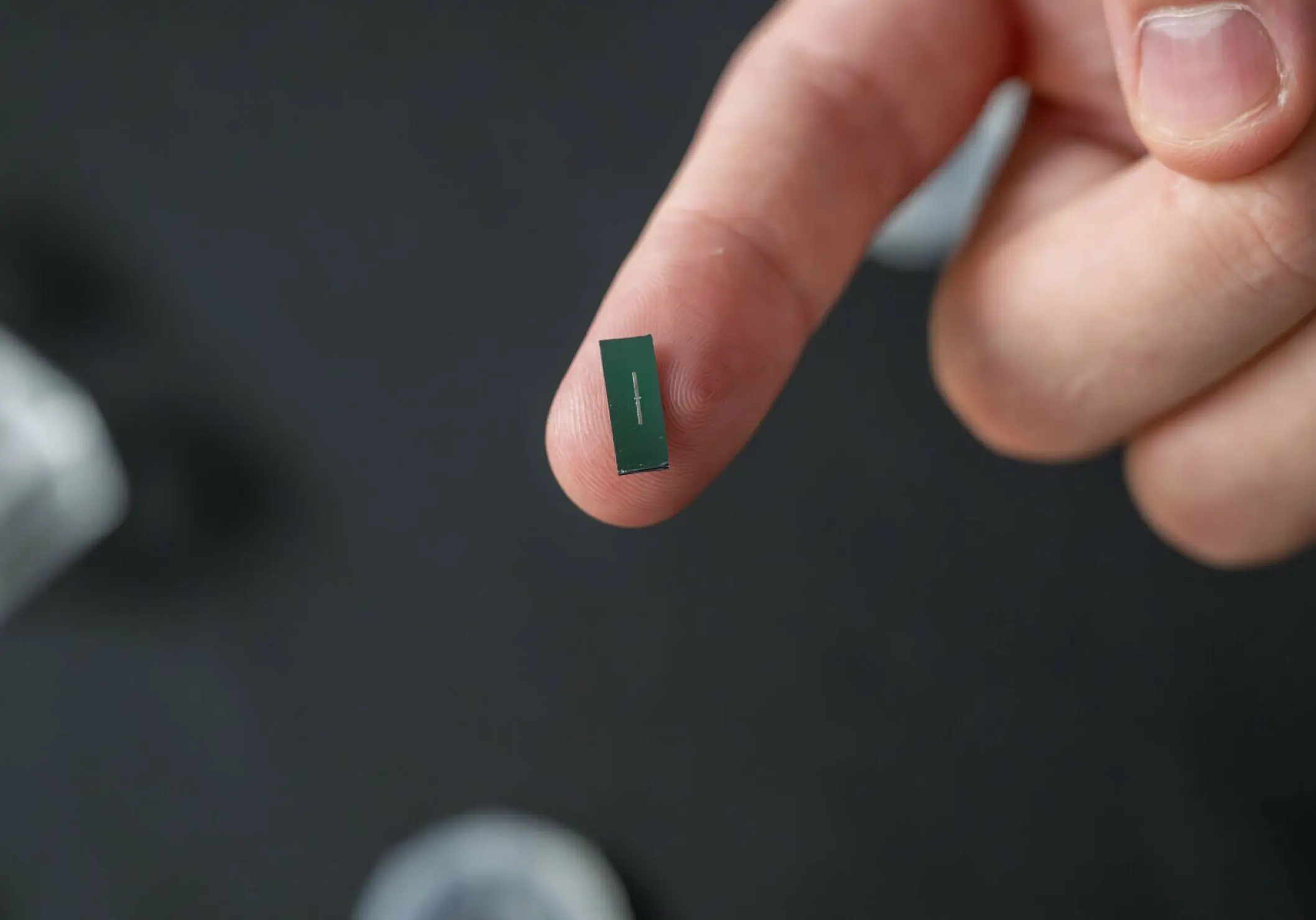
A magnetostrictive hydrogen sensor
The first sensing demonstration: palladium-coated MagTag resonators read hydrogen wirelessly and reset themselves.
Read more →
Through-barrier communication
Batteryless near-field sensing and communication through conductive shielding.
Read more →The resonators are made from our magnetostrictive thin films →
Need to sense something nobody makes a sensor for?
Tell us the target, the environment, and the constraints. We'll tell you how we'd build it.