Through-Barrier Communication at Los Alamos National Laboratory
Working with Los Alamos National Laboratory, VastVision is developing batteryless sensing and communication that passes straight through conductive shielding, with no penetrations or wires.
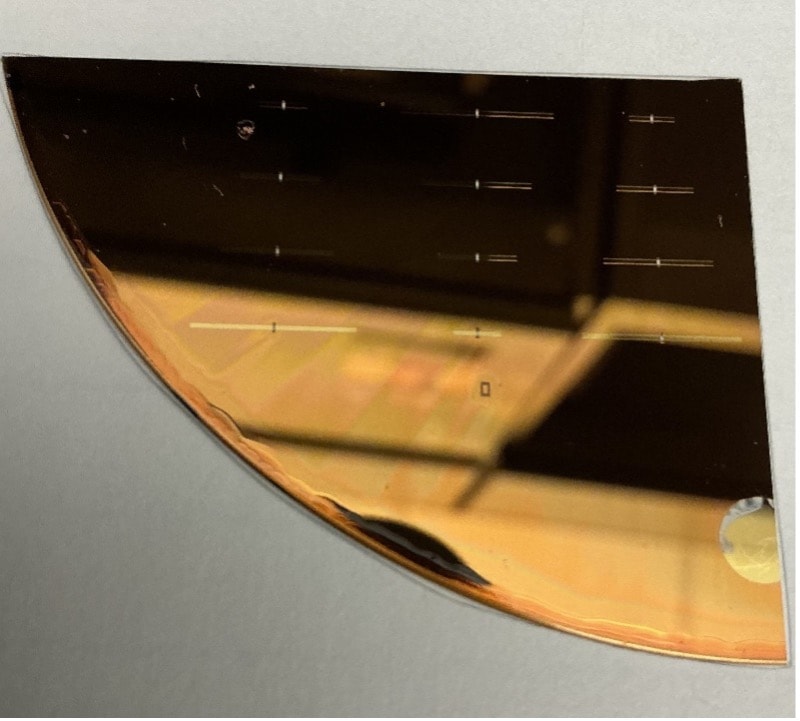
Radio stops at a metal wall
Conductive enclosures are built to keep things in and signals out. Radio and other propagating electromagnetic waves die out inside a metal wall through skin-depth attenuation, so a sealed canister, vault, or shielded room is effectively silent.
Until now there has been no passive way to monitor what is inside. Reading a sensor meant running a wire or cutting a penetration through the very barrier that exists to protect the contents.
Crossing the barrier in the near field
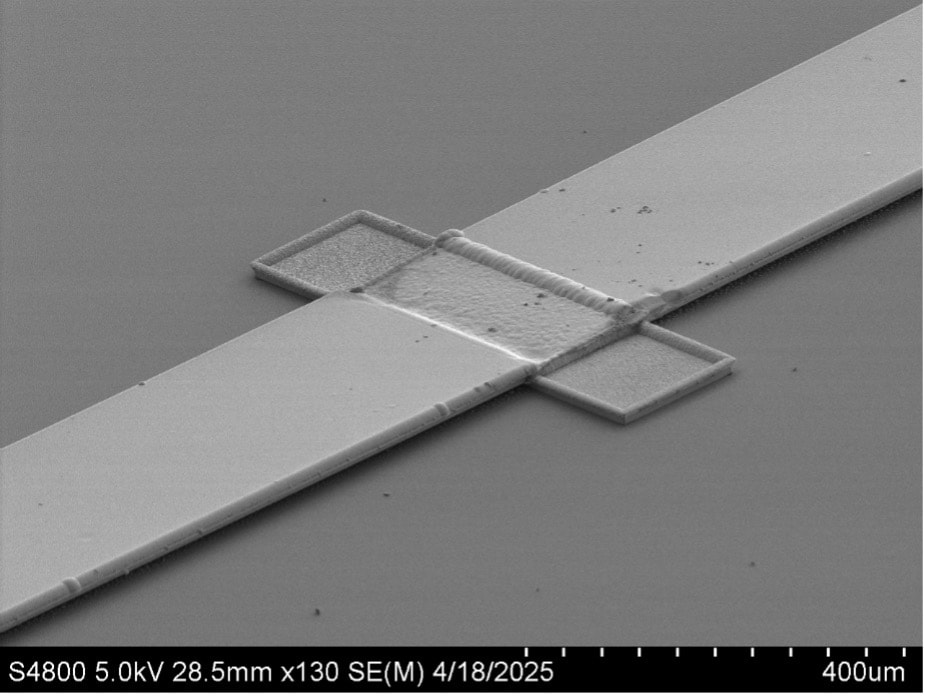
Near-field quasistatic magnetic fields are not governed by the skin-depth attenuation that blocks RF in conductive enclosures.
VastVision's transmitter and receiver interact through oscillating magnetic fields in the near-field zone rather than through radiation, so the signal crosses the wall of a nuclear storage canister. On the inside, batteryless sensor elements built from our magnetostrictive thin films respond without needing power of their own.
What it can read through the wall
Demonstrated or under active development.
Chipless unique identifier
Identify what is inside a sealed container without opening it.
Temperature
Monitor thermal conditions behind the barrier.
Tamper detection
Know if a container or its contents have been disturbed.
Pressure
Track pressure changes inside sealed enclosures.
Gas sensing
Detect gases building up where no one can look.
Biological agents
Sense biological threats inside a shielded space.
Built for the places that can't be opened
Through-barrier sensing matters most where breaching the barrier is not an option, and where a wired or powered sensor would be a liability.
- Nuclear material tracking: tamper-evident monitoring of stored material, supporting material control and accountability
- Critical infrastructure protection: passive sensing that cannot be remotely compromised
- Supply chain security: tracking sensitive assets through contested environments
- Shielded facilities: monitoring inside conductive enclosures without penetrations
LEEP Fellowship and an active CRADA
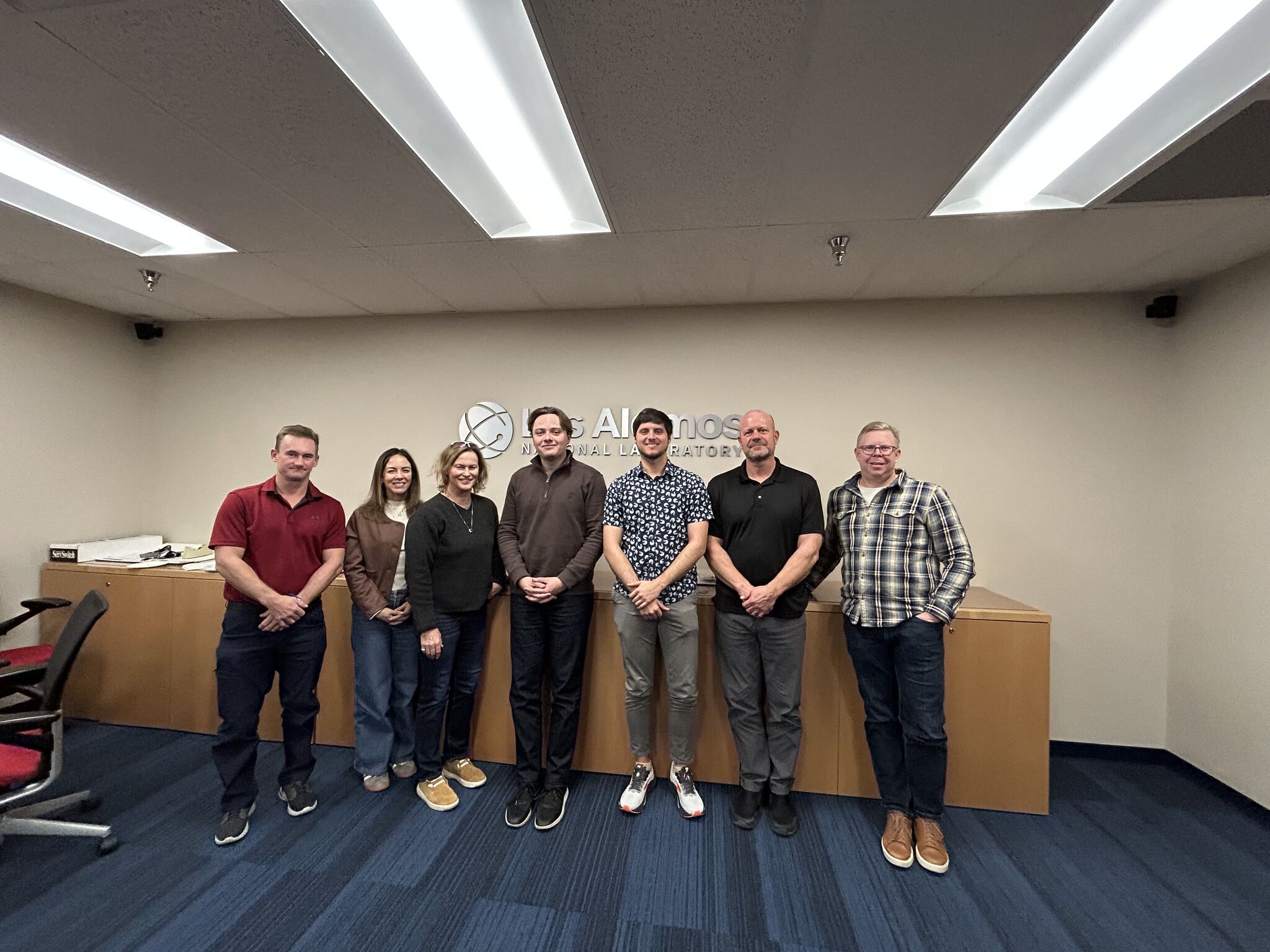
In January 2025, VastVision CEO and Co-Founder Kyle Guin was named a Los Alamos National Laboratory LEEP Fellow, giving the company direct access to LANL researchers, facilities, and instrumentation as it develops its batteryless sensing platform.
VastVision also works with the Laboratory under an active Cooperative Research and Development Agreement (CRADA), pairing VastVision's materials and device fabrication with LANL's national-security mission and expertise.
The technology behind it
Need to see inside something you can't open?
Tell us about the enclosure and what you need to know. We'll scope the sensing.