The Internet of Things (IoT) is the network of physical objects that collect data about the real world and share it over a network. A sensor on a shipping container, a tag on a piece of equipment, a monitor on a motor: each becomes a source of live information that software can act on. In short, IoT gives ordinary physical things the ability to sense, report, and respond.
The four building blocks of an IoT system
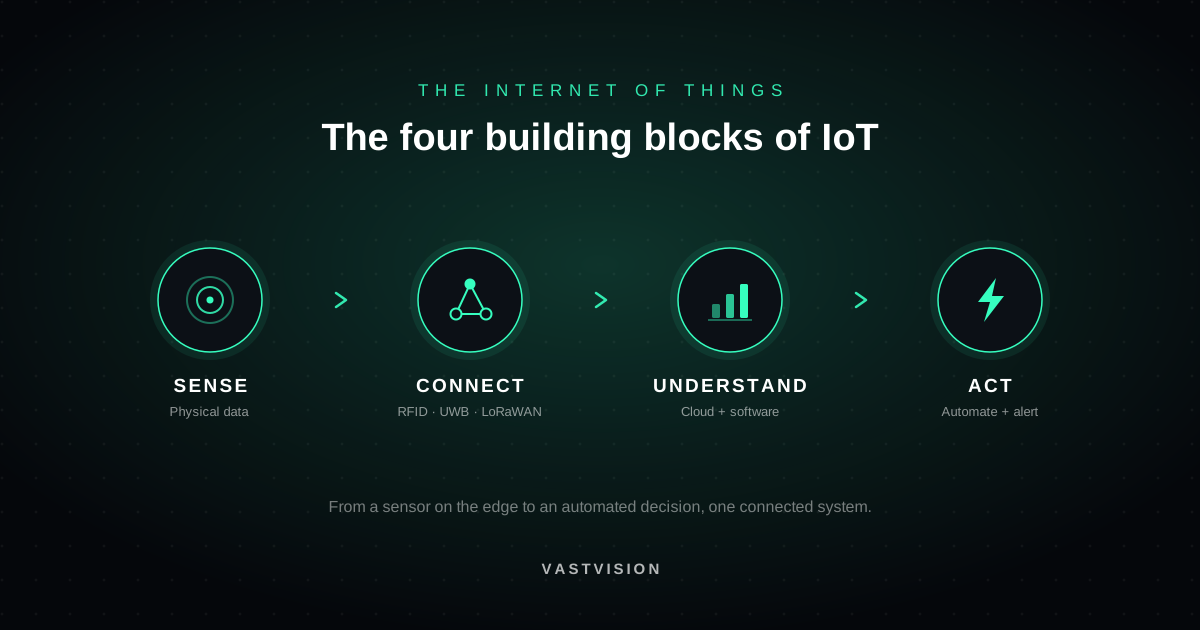
Almost every IoT deployment, from a smart thermostat to a facility-wide monitoring platform, is built from the same four layers:
- Sensors and devices that measure something physical: location, temperature, vibration, humidity, presence, or motion.
- Connectivity that carries the data from the device to a network, using technologies such as RFID, Ultra-Wideband, LoRaWAN, Bluetooth, Wi-Fi, or cellular.
- Data and software that store, organize, and interpret the readings, usually in the cloud.
- Action, where those insights trigger an alert, update a dashboard, or automate a decision without a person in the loop.
IoT and Industrial IoT (IIoT)
Consumer IoT covers familiar products like smart speakers and wearables. Industrial IoT, or IIoT, applies the same idea to warehouses, factories, hospitals, and defense operations, where the stakes are higher and the environments are harsher. IIoT is where connected sensing turns into measurable outcomes: less downtime, fewer lost assets, safer facilities, and better use of expensive equipment.
How IoT devices connect
There is no single right way to connect an IoT device. The best choice depends on range, power budget, precision, and cost. A few of the most common options:
- RFID identifies and tracks large numbers of items cheaply, with passive tags that need no battery.
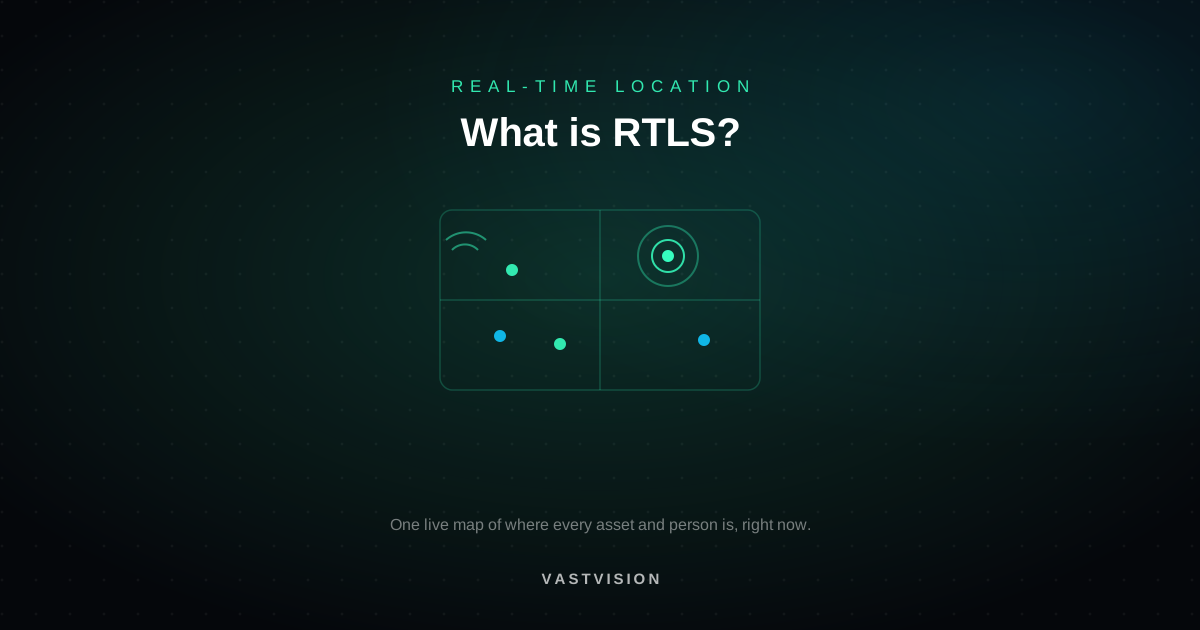
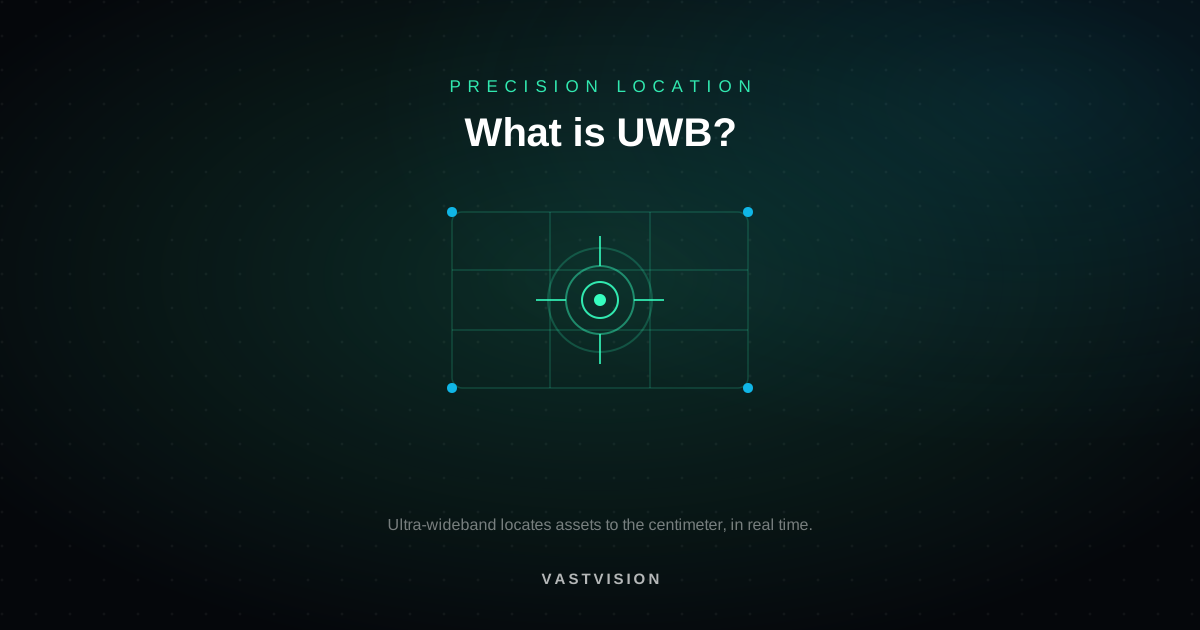
- Ultra-Wideband (UWB) delivers high-precision, real-time indoor location.
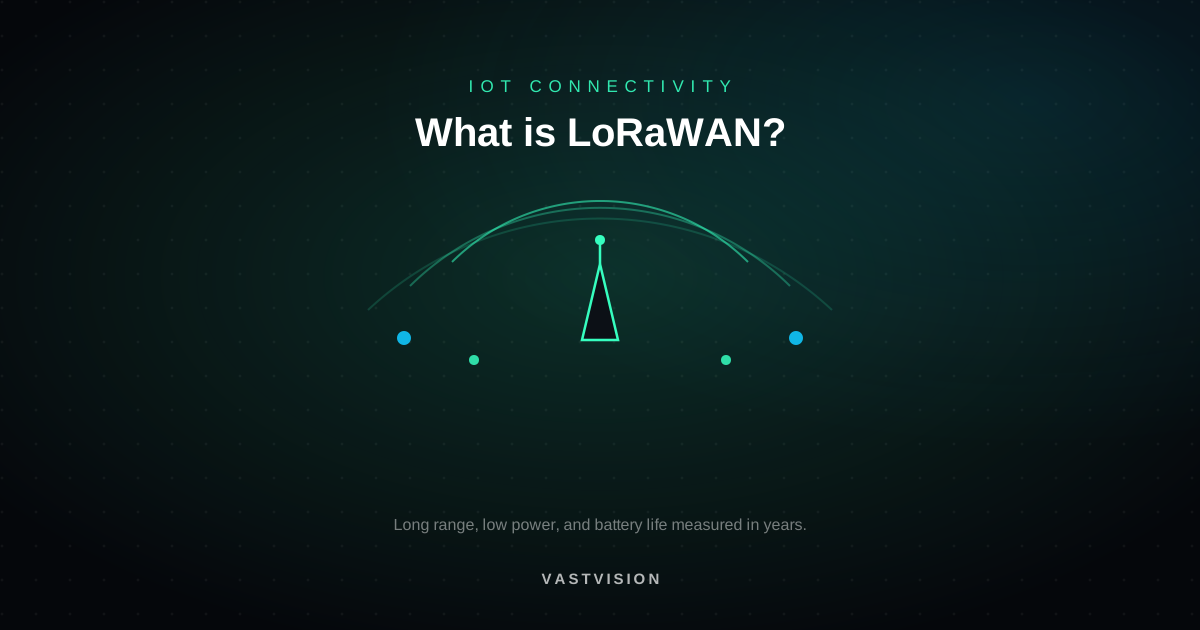
- LoRaWAN provides long-range, low-power connectivity that can run for years on a single battery, ideal for outdoor and remote sites.
- Bluetooth, Wi-Fi, and cellular fill in for short-range, high-bandwidth, and wide-area needs respectively.
What IoT makes possible
Once physical assets can report on themselves, a lot becomes possible:
- Asset and inventory tracking: know where equipment, tools, and stock are in real time.
- Condition monitoring: catch a failing motor or a temperature excursion before it becomes a costly problem.
- Process automation: trigger reorders, workflows, and alerts automatically from live data.
- Compliance and safety: prove chain of custody and monitor restricted or hazardous areas.
The challenges to plan for
IoT is powerful, but a real deployment has to account for a few hard problems:
- Security: every connected device is a potential entry point, so encryption, access control, and monitoring matter from day one.
- Power: battery replacement does not scale to thousands of devices, which is why battery-free and low-power designs are so valuable.
- Scale and data: thousands of sensors produce a flood of readings that only deliver value if the software layer turns them into clear action.
Where VastVision fits
VastVision builds industrial IoT systems end to end, from the sensor to the software. We combine RFID, UWB, and LoRaWAN with rugged industrial sensors and an IoT middleware layer so that asset tracking and condition monitoring work reliably in demanding environments. The result is infrastructure that can sense, understand, and act.
Wondering how connected sensing could apply to your operation? Talk to a VastVision expert and we will map it to your use case.
Related reading
Talk to the lab
Working on something like this?
Tell us what you need to track, sense, or build. We’ll tell you how we’d approach it.