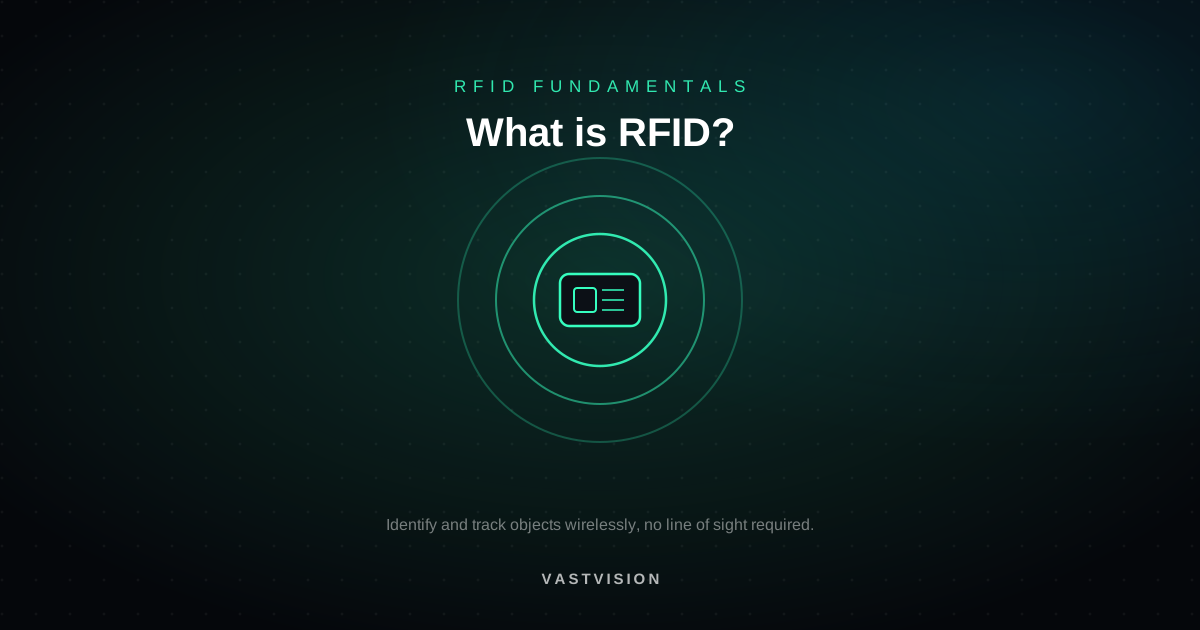
RFID stands for Radio-Frequency Identification. It is a way to identify and track physical objects wirelessly using radio waves, with no line of sight required. A small tag on the item stores a unique ID, and a reader retrieves it over the air.
RFID is one of those technologies you interact with constantly without noticing: the badge that opens your office door, the toll tag on your windshield, the anti-theft tags on retail clothing, and the inventory systems behind almost every warehouse. This guide explains what RFID is, the two pieces of hardware that make it work, and what RFID blocking actually does.
What does RFID mean?
RFID stands for Radio-Frequency Identification. It is a method of automatically identifying and tracking objects using radio waves. Each item carries a small tag that stores a unique identifier, and a reader uses radio signals to retrieve that identifier without needing to touch or even see the tag.
What is RFID and how does it work?
An RFID system has two core parts: a tag attached to the item, and a reader that communicates with it. The reader sends out a radio signal through an antenna. When a tag enters that field, it responds with the data stored on its chip. Because this happens over radio waves, RFID does not need line of sight the way a barcode scanner does, and a single reader can capture many tags at once, often hundreds per second. That combination of no line of sight and bulk reading is what makes RFID so powerful for inventory and asset tracking. For how this fits into connected systems more broadly, see What Is IoT?
What is an RFID tag?
An RFID tag (sometimes called a transponder or smart label) is the small device attached to the item being tracked. It has two parts: a microchip that stores the identifier, and a small antenna that sends and receives radio signals. Tags come in three main types:
- Passive tags have no battery. They draw power from the reader's radio signal, which makes them inexpensive, thin, and long lasting. Most inventory and retail tags are passive.
- Active tags carry their own battery and broadcast a signal continuously, giving them much longer range. They cost more and are used for high-value assets and real-time location.
- Semi-passive tags sit in between, using a battery to power the chip while still relying on the reader to communicate.
Tags also vary by frequency (low, high, and ultra-high frequency), which affects range and how they behave around metal and liquid. Choosing the right tag for the environment is one of the most important decisions in an RFID deployment. We break down the long-term economics in Passive vs. Active RFID.
What is an RFID reader?
An RFID reader (also called an interrogator) is the device that communicates with tags. It sends radio energy out through one or more antennas, receives the signals tags send back, and passes that data to software. Readers come in two broad forms:
- Fixed readers are mounted in place, for example at a dock door, a doorway, or a conveyor, to capture tags automatically as items pass by.
- Handheld readers are portable units a worker carries to locate items, take inventory, or scan on the move.
The reader plus its antennas define the read zone, and tuning that zone correctly is what separates a reliable deployment from a frustrating one. See our RFID technology overview for how we design these systems.
What is RFID blocking?
RFID blocking refers to materials or products, such as RFID-blocking wallets, sleeves, and passport holders, that contain a layer of metal or shielding designed to stop radio signals from reaching a tag. The goal is to prevent someone from wirelessly reading the RFID chip in a contactless credit card or passport without your knowledge, sometimes called skimming.
Do you actually need it? For most people the real-world risk is low. Modern contactless payment cards use one-time cryptographic codes rather than exposing your full card number, and reading a chip from a distance in a crowd is harder than it sounds. RFID blocking is inexpensive peace of mind, but it is not the security emergency it is sometimes marketed as. It also has nothing to do with industrial RFID asset tracking, where the goal is the opposite: tags you want read easily and reliably.
RFID in the real world
Beyond wallets, RFID runs quietly behind retail inventory, warehouse logistics, healthcare equipment tracking, manufacturing, and defense accountability. For a tour of how it is applied by sector, read RFID Technology Across Different Industries.
Where VastVision fits
VastVision designs and deploys complete RFID systems, from choosing the right tags and readers to the software that turns reads into real-time visibility. If you are weighing whether RFID fits your operation, talk to a VastVision expert and we will help you scope it.