Ultra-wideband (UWB) is the technology behind the most precise indoor positioning available today, locating a tagged object to within a few centimeters in real time. This guide explains how UWB positioning actually works, how accurate it is, and where it fits.
What is ultra-wideband (UWB)?
UWB is a short-range radio technology that sends data in extremely short pulses spread across a very wide band of spectrum. That wide bandwidth is the key: it lets UWB devices measure timing with extreme precision, which is what makes accurate positioning possible. It is the same class of technology now built into modern smartphones for precise device-to-device location.
How UWB measures position
Most positioning systems estimate distance from signal strength, which walls, metal, and people distort badly indoors. UWB takes a different approach: it measures time of flight, the actual time a radio pulse takes to travel between two devices. Because radio waves move at the speed of light, timing a pulse to fractions of a nanosecond translates directly into a precise distance. Two methods build on this:
- Two-way ranging (TWR): a tag and an anchor exchange pulses and calculate the round-trip time to derive distance.
- Time difference of arrival (TDoA): a tag sends one pulse and multiple synchronized anchors compare exactly when each received it to compute position.
Anchors and tags
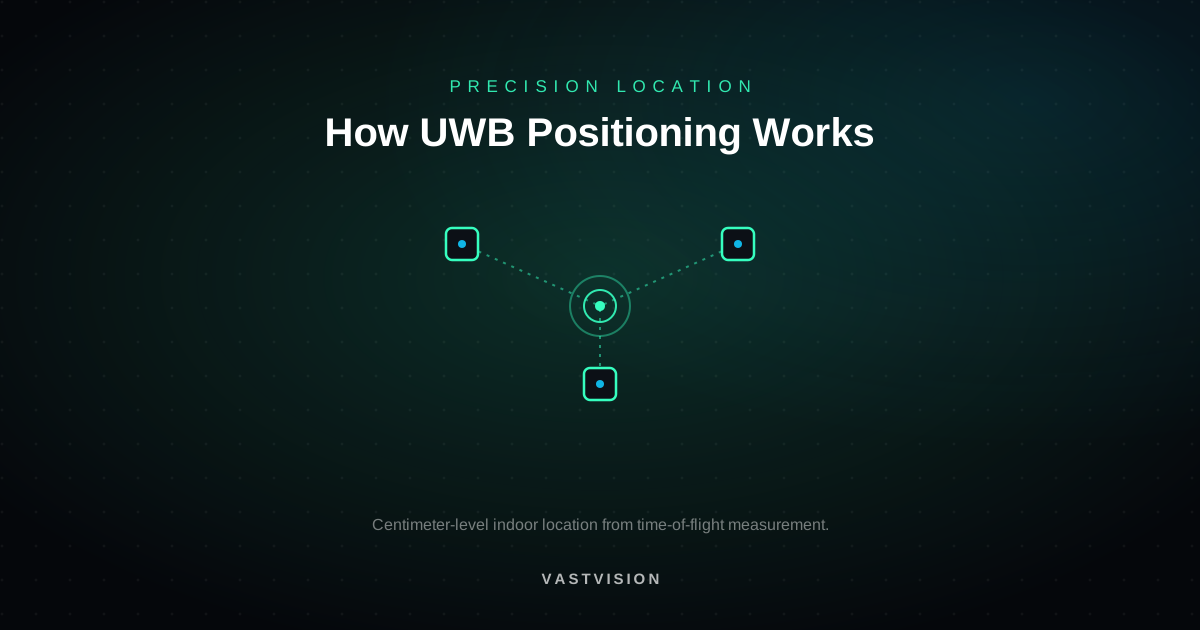
A UWB system has fixed anchors mounted at known points around a facility, like indoor GPS satellites, and small tags on the assets or people you want to locate. The two exchange pulses, and software triangulates each tag's live position on a map many times per second.
How accurate is UWB positioning?
In a well-designed deployment, UWB locates a tag to within roughly 10 to 30 centimeters, far tighter than RFID, Bluetooth, or Wi-Fi, which place an asset in a room or general area rather than an exact spot. The precision comes from the time-of-flight method plus the wide bandwidth, which resists the reflections that confuse other indoor technologies.
UWB for indoor navigation and operational visibility
Because it works where GPS cannot, UWB powers real-time indoor use cases: locating tools and equipment on a plant floor in seconds, tracking work in process through each station, enforcing safety zones around machinery, and guiding people or autonomous systems through complex spaces. It is the technology behind high-precision indoor asset tracking, and it complements zone-based tracking when you only need to know which area an asset is in.
UWB vs RFID, BLE, and GPS
Each has a job. RFID is best for cheap, high-volume identification at a fixed point. Bluetooth and Wi-Fi suit room-level proximity. GPS is for the outdoors and cannot see inside a building. UWB sits at the high-precision end: real-time, centimeter-level indoor location for high-value or safety-critical assets. Many deployments combine several, as covered in our guide to IoT.
When UWB is the right choice
UWB is worth it when precision drives value: dense environments, safety-critical zones, or operations that lose real time hunting for specific items. If room-level accuracy is enough, a lighter technology may be more cost-effective. Talk to a VastVision expert to find the right fit.